A group of scientists from Lawson Health Research Institute (LHRI) is using "state-of-the-art analysis technology" to better understand COVID-19 and help develop more personalized treatments for severe cases.
The research team studied how the proteins in blood plasma adapt and change when the body is infected with COVID-19.
"The proteins being studied are released by cells that often play an important role in the body's immune response to viruses," a report from LHRI explained.
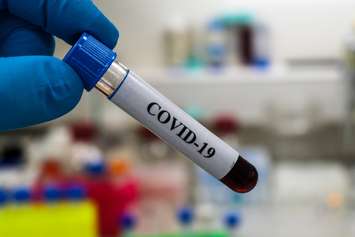
Researchers examined blood from three types of patients: those with COVID-19, those with a severe infection that is not COVID-19, and a healthy control group. Blood samples were taken from 30 patients in critical care at London Health Sciences Centre at various stages throughout their stay. The blood plasma was isolated in order for researchers to take a closer look.
“We collected plasma from these patients and measured well over a thousand proteins with great accuracy using new technology that combines immunology and genomics," said Dr. Douglas Fraser, a Lawson scientist, Critical Care Physician at London Children’s Hospital, and Professor at Western University.
https://www.youtube.com/watch?v=o7zq-mFo82Y
According to LHRI, "COVID-19 patients demonstrated changes in immunosuppression pathways," especially those who were critically ill.
In-depth analyses of blood plasma gave researchers an idea of which cells were active during at different stages of disease, and how the organs held up against infection.
“This study has allowed us to understand the progression of the disease processes in very sick patients, providing us clues on the body’s immune system and other systems that were reacting to the severe disease,” said Dr. Victor Han, Lawson Scientist, Director of Children's Health Research Institute, and Professor at Western University.
“We hope that this knowledge will allow us to identify the patients who will become severely ill, and develop new therapies to counteract the changes occurring within their bodies," Han added.
Fraser also expressed hope that this research will aid in the development of new drug therapies that could improve outcomes for critical COVID-19 patients.
According to LHRI, next, the research team will use the same technology to study plasma biomarkers in long COVID patients to find out why some patients develop prolonged disease, while others do not.
The full scientific article can be found in the Journal of Cellular and Molecular Medicine.