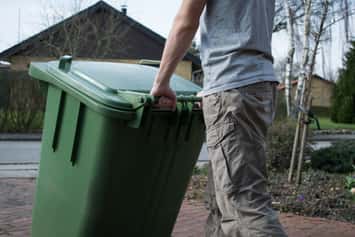
Plans continue to progress as the City of Sarnia gets ready to introduce a new green bin program.
A Waste Master Plan was adopted in 2024, which incorporated the provincial requirement to eventually begin collecting organic waste.
General Manager of Engineering and Operations David Jackson said the provincial policy statement set a target of January 2025 for implementation, so the city is a little behind. However, he said staff have developed a master plan, prepared the tenders in house, and monitored how other municipalities started running their programs.
"It has been somewhat beneficial for us to learn lessons from how they're rolling out," he said.
During Monday's meeting, city council will be asked to award three, seven year contracts - totalling $24.8 million - with the option of extending them by another three years.
It's recommended council accept proposals from Marcotte Disposal Inc. for curbside waste collection and transfer station services, and use Convertus Canada Ltd. for organic waste processing.
Jackson said seven years is the industry standard.
The current waste collection contract is due to expire next year, so the new program is expected to start in the spring of 2027.
As stated in a report to council, the new green bin program is expected to create a "significant" cost increase to the waste management program.
The increase is estimated to cost $1.1 million, which could result in a tax increase of 1.25 per cent.
City staff are looking at ways to minimize the impact, which includes spreading the overall tax increase over the 2027 and 2028 budgets.
Marcotte's proposal involves manual collection for garbage every other week and semi-automated weekly collection for green bin items, yard waste, and small brush. The proposal amounts to an annual cost of $2.6 million.
Marcotte's bid for transfer station services, amounts to $203,927 per year.
As for organic waste, city staff recommend awarding this contract to Convertus Canada - based in London - and further suggest "option c" when it comes to pricing. This option would allow for a broad range of items to be collected and would involve a tiered pricing system depending on volume.
Based on the most competitive rate of $77.59 per tonne, the annual price for option c would be $737,046.
Some of the materials that would be accepted through option c include diapers, sanitary products, and pet waste. Jackson said the recommended contractor can screen out anything that can't be composted.
"One of the reasons why we like that - even though some of those things will end up in the landfill - it simplifies it," Jackson said. "From reviewing other municipalities, there's a lot of hesitancy in using the green bin and it takes them quite a while to get residents on board, part of that is the confusion about what can go in them. So we want to make it simple so anything you think possibly could go in there, should be able to go in there."
When the Waste Master Plan was adopted, concerns were raised about the loss of weekly garbage collection. Jackson said if weekly collection were to be maintained, it would cost well over $300,000 extra per year.
"That is why we are recommending using the processor that will allow diapers and pet waste, because then anything that causes odours or anything like that, that is a concern, you would be able to dispose of weekly," Jackson said. "Really then, there isn't that much left to go into your regular garbage."
The next step will involve looking at containers.
"We are looking now at do we have options for the size of green bin, do we go with a bigger one or smaller one depending on if we want to make it simple to put some yard waste into the green bin," he said. "That is the next piece of the process."
Jackson said the city would supply the containers to residents. They're estimated to cost $1.5 million.
Once all is said and done, Jackson said the city will carry out "a very extensive" communication campaign so residents know what to expect.
Meanwhile, city staff will discuss equitable options with the County of Lambton since the county will see savings on landfill costs once the city starts sending material to the organic waste processor.