It's odourless, tasteless, and invisible, but radon gas is the second leading cause of lung cancer after smoking, and public health officials hope you will test your home for it.
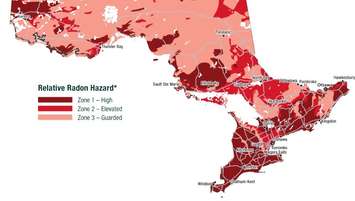
The Windsor-Essex County Health Unit conducted a study on the prevalence of radon gas across the region a few years ago and discovered about 11 per cent of all homes have higher than 200 Bq/m3, higher than the level considered safe.
That is more than twice the percentage of homes across Ontario that showed levels so high. A study conducted a decade ago suggested 4.6 per cent across Ontario, 6.9 per cent nationwide had unacceptably high levels of radon.
With more people working and learning from home, the health unit fears some residents are exposed for longer periods.
"This has meant that some people spend upwards of eight hours per day in the basement," said Acting Medical Officer of Health Doctor Shanker Nesathurai.
He calls winter "an optimal time to test" for the gas.
Radon is a naturally occurring gas found across the country, although the highest levels are found in Manitoba, Saskatchewan, New Brunswick and Yukon. It seeps into homes through cracks in the foundation.