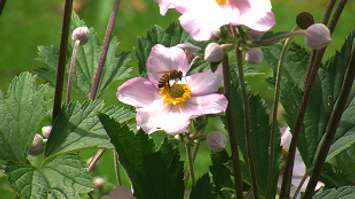
Two studies published in the journal 'Nature' look at the impact of neonicotinoid pesticides on bees.
The University of Guelph's Professor Nigel Raine was asked to analyze those studies for the publication.
One was a field study, the other a lab study.
Professor Raine says the field study suggest the health and reproduction of wild bees could be affected as a result of exposure to neonic seed treatment applied to crops attractive to bees.
He says the lab study suggested bees sought out neonic-treated sugar water over untreated sugar water.
One of his conclusions is that researchers need to consider pesticide impacts on bumblebees and solitary bee species as well as honeybees.
According to Professor Raine, more research is needed to help balance the risks for insect pollinators associated with pesticide exposure against the value of those products in helping crop yield and quality.
The University of Guelph professor also suggests it would be unfortunate if the recent focus on neonics unintentionally led to broader use of alternative pesticides which could end up being more harmful to pollinators and the ecosystem they provide.